Floating solar vs. ground-mount solar: how site requirements differ
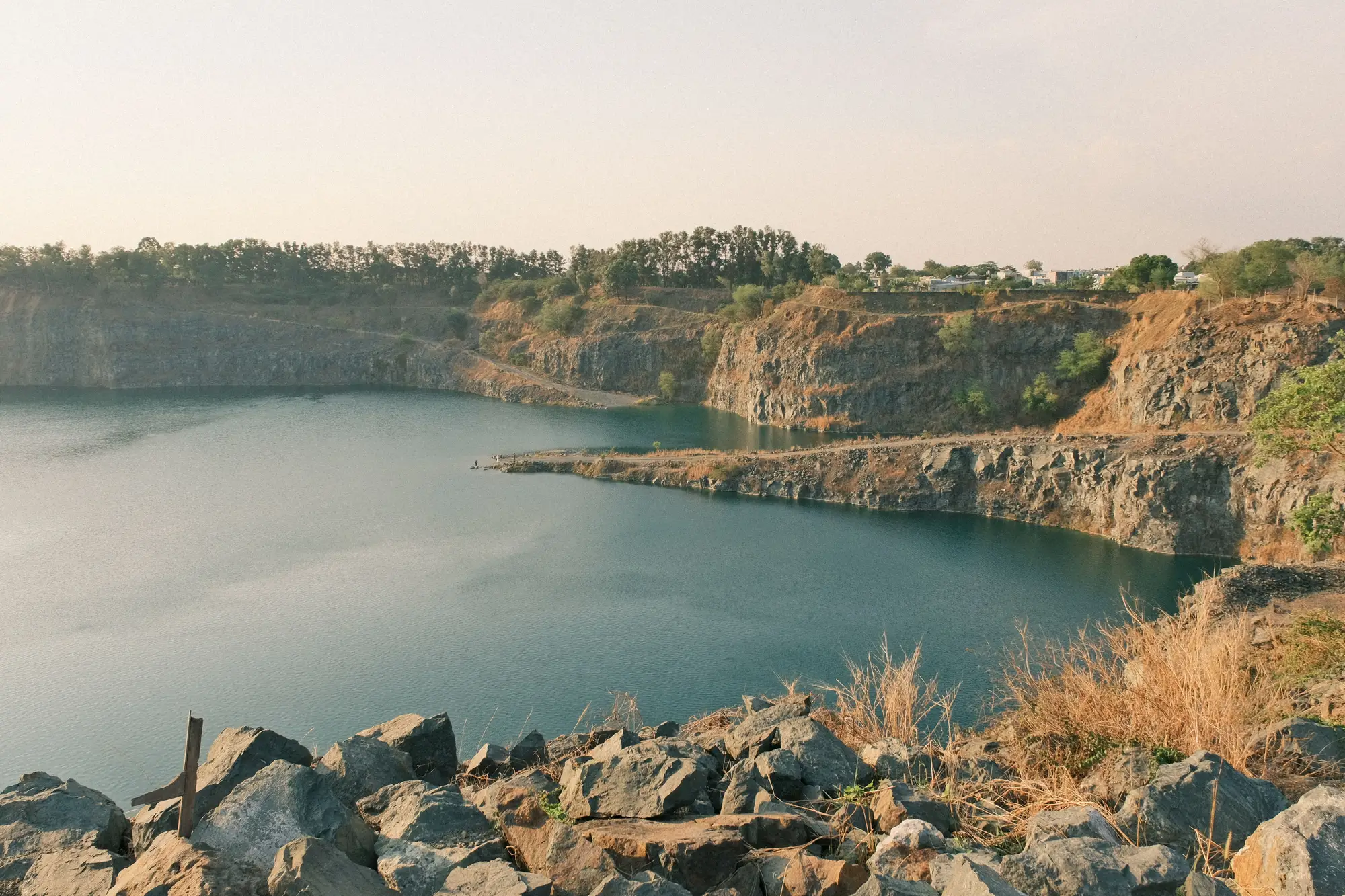
A ground-mount project and a floating PV project ask two different sets of questions before anyone draws a layout. Ground-mount cares about soil, grading, setbacks, and land cost per acre. Floating cares about what the water column does over a year, how the shoreline is built, and whether anything above or around the water will shade the array for part of the day. Swap the checklist and you'll miss the thing that kills the project.
Land vs. water: the first filter is different
On a ground-mount site, the early screen is parcel size, slope, soil bearing capacity, and whether the land is zoned for it. You're ruling sites in or out based on topography and ownership.
On a reservoir, quarry lake, or settling pond, parcel size isn't the constraint. Surface area is, and it has to be read against the water body's actual footprint, not its name on a map. A "200-acre reservoir" might have 60 usable acres once you cut out the deep intake zone, the spillway approach, and a bay that draws down six feet every August. That drawdown is the part ground-mount developers don't have to think about at all: water level stability over the year. A reservoir that swings wildly with irrigation releases or flood control drawdown puts real stress on mooring lines and anchor points, and a site that looks huge in a wet month can shrink fast by September.
Shading works differently too. Ground-mount developers worry about trees and adjacent structures along the array's southern exposure. On water, you're also dealing with dam faces, quarry walls, and tree lines right at the shoreline, closer to the array than a typical ground setback would ever put them, because the float sits right up against the bank in places.
Shoreline access and anchoring replace grading and setbacks
A ground-mount site that clears the land screen still has to pass grading and drainage review. A water body that clears the surface-area and stability screen still has to pass a shoreline access check: can a crew actually get a barge, cabling, and anchor points to the water's edge, or does a steep bank, rip-rap, or a locked gate at the water right stop them cold?
Anchoring and mooring are the floating-specific line item with no ground-mount equivalent. The system has to hold position through water level swings and wind-driven wave action across the year. That means sizing the anchoring approach, and sometimes the lease terms with the water body owner, against the reservoir's full seasonal drawdown and high-water marks, numbers a single site visit won't show.
None of this makes floating PV harder than ground-mount, it just moves the hard questions to a different set of variables, and a developer who sources those variables as efficiently for water bodies as they do for land parcels will rank candidates faster than one working from drawdown logs and shoreline photos pulled one reservoir at a time.
What this means for ranking candidates
A developer building a pipeline across a utility's reservoir portfolio, or a quarry operator's inactive pits, can't just reuse a ground-mount screening template and swap "soil" for "water." Surface area, level stability, shading geometry, and shoreline access each need their own pass, and they interact: a stable, shaded reservoir with no shoreline access ranks lower than a less stable one with a boat ramp and a gentle bank. Done by hand, that means pulling water-level records and shoreline maps for each candidate one at a time, fine for three reservoirs and slow for thirty.
Floating Solar Screening builds that ranking from annual high-resolution satellite imagery across surface area, level stability, shading, and shoreline access for every reservoir, quarry lake, or settling pond in a portfolio, so the comparison across water bodies is already done before anyone opens a drawdown record. If your next step is narrowing a list of candidate water bodies down to the ones worth a site visit, that's the use case this is built for.