What is wind fetch, and why floating solar anchoring depends on it
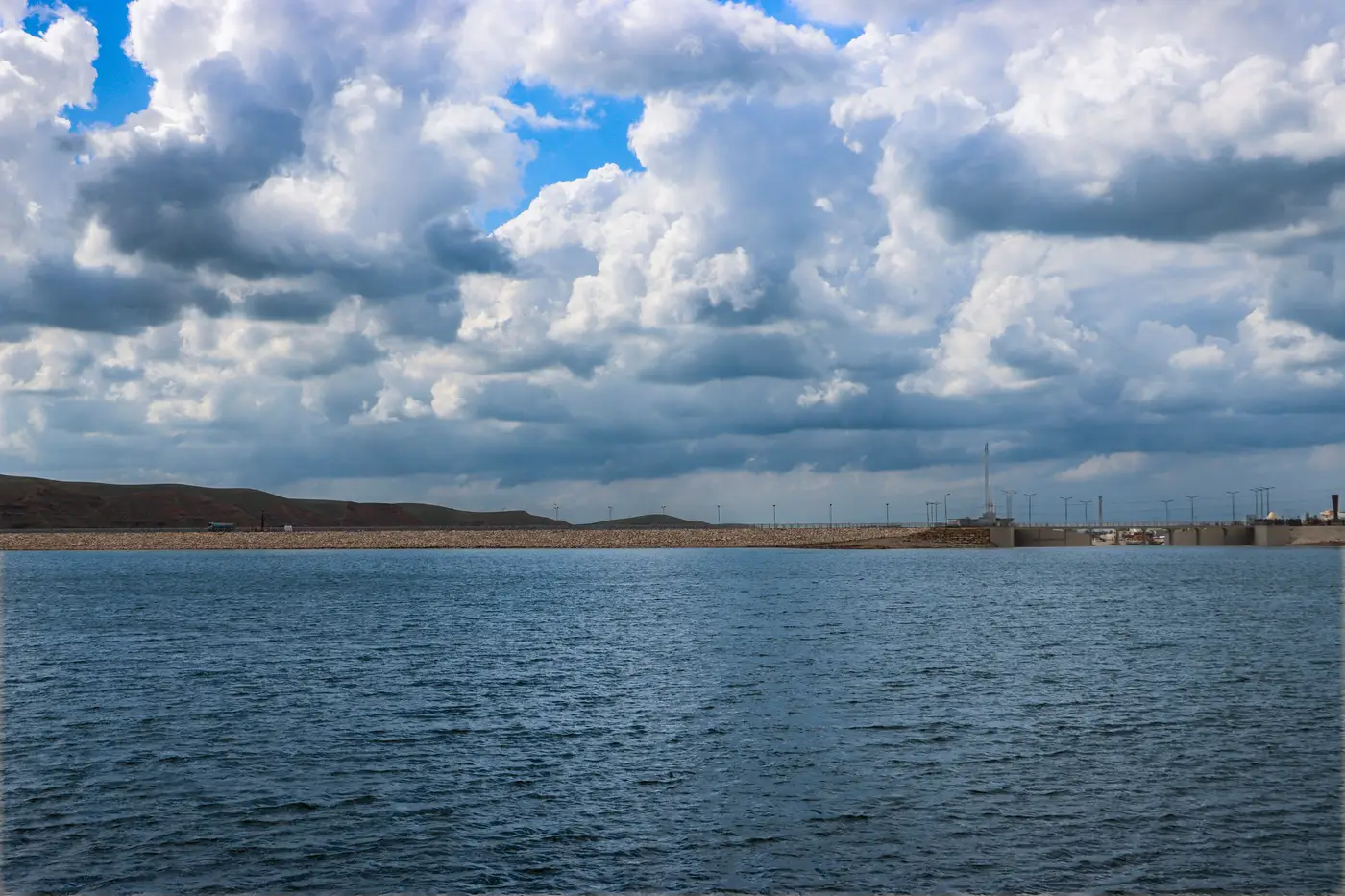
Wind fetch is the stretch of open water a wind can blow across without anything breaking it up, no point, no tree line, no opposite shore. Measure it from the direction the wind usually comes from, out to the edge of the water body, and you've got your fetch distance. It sounds like a small thing to track down before you start sizing a mooring system. It isn't.
Fetch is the input that turns an ordinary windy afternoon into a wave problem. A reservoir with a short fetch, say a few hundred meters across a narrow arm, stays relatively flat even in a stiff breeze. The same wind blowing across a 4 km open basin builds real chop, and that chop is what your anchors and floats have to absorb for the life of the project.
How fetch becomes wave height
Wave height on inland water depends on three things working together: wind speed, how long the wind blows, and fetch distance. Of the three, fetch is usually the one nobody checks until an EPC asks for it. Wind speed and duration you can pull from a regional weather station. Fetch is site-specific, it changes with wind direction, and it's different for every reservoir on a candidate list.
This is where reservoirs and quarry lakes behave differently from the open sea, but not as differently as people assume. You don't need ocean-scale fetch to get waves that matter for a floating array. A 2 to 3 km fetch under a 15 m/s gust, which plenty of mid-latitude reservoirs see a few times a year, can produce wave heights that push mooring loads well past what a sheltered cove would need. Settling ponds and quarry pits, by contrast, are often small enough that fetch stays short no matter which way the wind blows, which is one reason they screen out as easier anchoring sites even before anyone runs a wave model.
Shape matters as much as size here. A long, narrow reservoir oriented along the prevailing wind direction can have a worse fetch problem than a bigger, rounder one where the wind only ever gets a short run at the water before hitting a shoreline.
What this means for anchoring loads
Mooring engineers size anchor lines and anchor points from the wave and wind loads the array has to survive, and fetch is the variable that sets how big those waves can get at a given site. Skip the fetch check and you're left with two bad options: over-design the anchoring system for a worst case that may not apply, which adds cost to every array on the list, or under-design it and find out during the first storm season that line tension exceeded what the anchors were rated for.
Shoreline access feeds into the same calculation. A site with a long fetch and a steep bank gives you fewer options for anchor placement and a harder install. A long fetch with a shallow, accessible bank is a different, more workable problem. None of this shows up by looking at surface area alone, which is usually the first number a developer pulls when ranking reservoirs.
The practical issue for anyone sitting on a list of twenty or thirty candidate water bodies is that fetch distance, shoreline geometry, and water-level stability don't come from one source. Pulling them one reservoir at a time, cross-referencing wind roses against shoreline maps by hand, is the part of early-stage screening that eats the most calendar time for the least decision value. It's useful work, but it's not where a project development manager's hours should go before a site is even past first-pass ranking.
That's the gap a faster screen across a candidate list closes: ranking reservoirs for floating-PV potential by surface area, shoreline access, and shading before anyone opens a wave model or calls a mooring supplier. Fetch and anchoring loads still need proper engineering once a site survives that cut, but at least the sites worth that engineering time get identified first.
If your list of reservoirs, quarry lakes, or settling ponds needs that first cut before anyone touches a fetch calculation, that's the problem Floating Solar Screening is built to handle.